

Navigating Wegovy and Mounjaro: Essential Tips for Healthy Weight loss

Updated: Apr 26
There are many people starting GLP-1 medications e.g. Wegovy or Mounjaro, without the involvement of a dietitian. These medications can successfully support weight loss but require careful attention to your nutrition and muscle health. Without a dietitian’s guidance, it’s easy to miss key steps that keep your body strong and your meals balanced. This post offers practical advice on maintaining muscle mass, building balanced meals, managing side effects, and recognizing warning signs that you might not be eating enough.
In this article we will look at the following topics:
What Happens When Someone Loses Weight Too Quickly
Rapid weight loss might sound appealing, but the body doesn’t see it as a “success” it sees it as stress. And when the body is stressed, it protects itself in ways that can cause issues later.
In the following section we will take a look at what happens when we don't eat enough or don't have balanced meals over a prolonged period of time:
1. Muscle Loss
When someone eats too little or loses weight very fast, the body doesn’t just burn fat. It also breaks down muscle tissue for energy.
Why this happens:
The body wants quick fuel → muscle will be broken down alongside fat
Appetite is low → protein intake drops
Irregular meals → long gaps without energy
Less strength training → no signal to “keep” muscle
Result: Less muscle → less strength, lower energy, poorer physical function.
2. Metabolism Slows Down
Muscle is metabolically active tissue. It’s like the engine of the body.
When muscle mass is lost:
Your “engine” becomes smaller
The body burns fewer calories at rest
The body becomes more efficient at holding onto energy (weightloss plateaus)
This is the body’s survival mode: “You’re losing weight too fast. I need to conserve energy.”
Even after weight loss stops, the metabolism may stay lower for a while.
3. Higher Risk of Weight Regain
This is the part people don’t expect.
When someone loses weight too quickly:
They lose a mix of fat and muscle
Their metabolism slows
Their appetite hormones often rebound strongly
Normal eating returns, but with a slower metabolism
So the body regains weight easily—and often more fat than before.
Over time, this cycle can lead to:
Higher body fat percentage
Lower muscle mass
Poorer blood sugar stability
Lower energy and vitality
Feeling like weight is “harder to control” each time. This is the classic yo‑yo effect.
Muscle = your calorie-burning engine
Rapid weight loss = shrinking the engine
A smaller engine = easier weight regain
Slow, steady weight loss with enough protein and strength training keeps the engine strong.
The Good News
This cycle is not inevitable. It can be prevented with:
Regular, balanced meals
Adequate protein
Regular strength training
Avoid skipping meals. A regular eating pattern supports a stable energy supply and muscle repair
Managing side effects that reduce intake (keep reading....)
Protecting muscle is one of the most important things you can do while using GLP‑1 medications
Strength Training: Your Secret Weapon
You don’t need a gym or heavy weights — just consistent resistance.
Aim for:
2–3 sessions per week
20–30 minutes each
Helpful options:
Bodyweight exercises (squats, lunges, wall push-ups)
Resistance bands
Light dumbbells
Pilates or strength-focused yoga
Strength training helps preserve muscle, supports metabolism, and improves long‑term weight maintenance.
Building Balanced, Regular Meal Patterns
Skipping meals is one of the biggest risks on GLP‑1 therapy. Even small, regular meals help protect musclemass and keep your metabolism steady. A consistent meal schedule helps manage hunger and supports steady energy. Skipping meals or eating irregularly can also worsen side effects like nausea or dizziness.
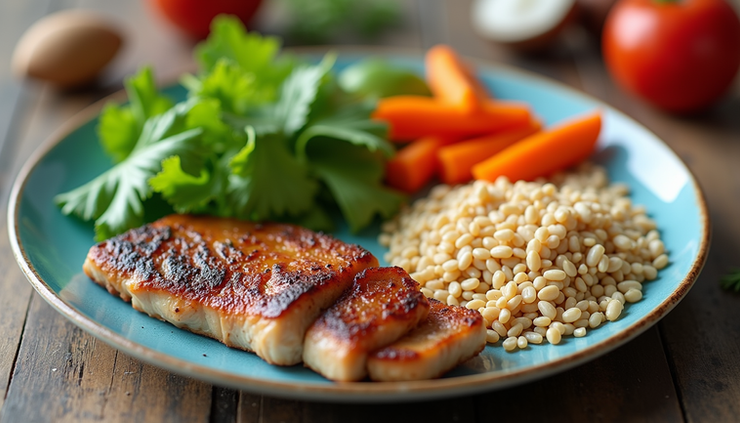
What does a balanced meal look like?
Divide your plate into three equal parts:
1/3 protein: chicken, tofu, fish, beans, lean meat, cottage cheese, lentils or eggs
1/3 salad / vegetables: leafy greens, broccoli, carrots, peppers etc. (the more varied the colours, the better)
1/3 wholegrain carbs: brown/wild rice, quinoa, wholewheat bread, oats, Wholegrain pasta
This balance provides essential nutrients, supports muscle, and keeps blood sugar stable
Tips for regular meals:
Eat small, balanced meals/snacks every 3 to 4 hours
Prepare simple meals ahead to prevent missing a meal
Include protein-rich snacks between meals, if needed
Managing Common Side Effects
GLP‑1 medications (like Wegovy, Mounjaro) work partly by slowing down the digestive system. This is helpful for appetite control—but it’s also the reason many people get side effects.
Here’s what’s happening inside the body, and how to manage the symptoms:
Constipation
Because GLP-1 medications slows digestion down:
The intestines contract less often
Food moves more slowly through the gut
The body absorbs more water from the stool
Stool becomes harder and more difficult to pass
Things that can help:
Increase fluids
Add fibre gradually (berries, oats, chia seeds, vegetables, wholegrain products)
Gentle, regular movement/exercise
Consider a fibre supplement e.g. psyllium husk
Early fullness
GLP‑1s tell the stomach: “Take your time. Don’t empty so fast.”
This means:
Food stays in the stomach longer
People feel full very quickly
Even small meals can feel “too much”
Nausea can appear because the stomach is still full when the brain thinks it should be empty
Things that can help:
Eat slowly, chew food well
Prioritize protein
Use softer textures during dose increases (soups, smoothies)
Avoid having drinks at mealtimes, especially carbonated ones
Low appetite / Nausea
GLP‑1 hormones naturally signal the brain about fullness. The medication strengthens this signal.
For some people, this “fullness signal” is so strong that the brain interprets it as:
mild nausea
reduced appetite
aversion to certain foods
This is where muscle loss risk is highest.
Things that can help:
Small, frequent meals
A short period with bland foods (rice, toast, bananas, yogurt)
Avoid high-fat meals
Ginger tea
Stay upright after eating
Don't eat too close to bedtime
Small meals every 3–4 hours
Add calories through healthy fats (avocado, nuts, olive oil) and fortify meals with protein powder
Consider a multivitamin/mineral supplement (keep reading for more information...)
If side effects persist or worsen, consult your healthcare provider.

When to Consider a Multivitamin
GLP‑1 medications reduce appetite, which can unintentionally reduce nutrient intake. A general multivitamin/mineral supplement may be useful if:
You’re eating a lot less than usual or skipping meals (for a prolonged period of time)
Your diet becomes very limited in variety
You struggle to meet needs for iron, B12, folate, vitamin D, calcium, or iodine
You rely heavily on protein shakes/bars or convenience foods
You notice early signs of nutrient deficiency (see below)
You avoid certain foods such as meat or dairy
A multivitamin is not a replacement for food, but it can act as a safety net during periods of low appetite.
We recommend:
Regular Monitoring: Get labs checked for key vitamins and minerals every 3-6 months.
Supplement Wisely: If in doubt, use supplements based on blood tests, not just precaution.
Professional Guidance: Consult a dietitian for a personalized plan to handle food aversion and lower intake.
If you have a medical condition or take other medications, check with a healthcare provider before starting supplements. Read here for more information about supplements.

When to Seek Professional Support (signs you aren’t eating enough)
If you’re taking a GLP-1 without the monitoring or input of a healthcare provider, it’s important to know when to reach out for help.
Pay attention to your body. Signs you may not be eating enough include:
Signs of Malnutrition or Nutrient Deficiency
These can appear when intake is too low for too long:
Hair thinning or hair loss
Brittle nails
Dry skin
Feeling cold all the time
Fatigue or weakness
Dizziness
Muscle loss or reduced strength
Poor wound healing
Mouth sores or cracks at the corners of the mouth
Other reasons to seek medical support
Persistent vomiting
Inability to eat or drink enough
Severe abdominal pain
Signs of dehydration
Rapid, unintended muscle loss
Feeling faint or unwell
You deserve safe, supported care — especially if you’re navigating this journey independently
Printable Protein-Rich Snack Ideas
To support muscle maintenance and balanced eating, here are easy protein-rich snacks you can prepare or carry with you:
Low fat Greek yogurt / Quark / Skyr with berries
Hard-boiled eggs
Cottage cheese with cucumber slices/ carrot sticks/ cherry tomatoes etc.
Roasted chickpeas or edamame
Nut butter on wholegrain crackers
Turkey or chicken slices with a baby cheese
Protein smoothie with milk and vegetables
Download your printable protein snack list here to keep handy during your Wegovy or Mounjaro journey:
Final Thoughts:
GLP‑1 medications are tools. They work best when paired with:
Regular, balanced meals (click here for shopping tips, or how to keep a healthy kitchen)
Adequate protein
Strength training / exercise
Side‑effect management
Awareness of nutrient and fluid needs
Self‑compassion (click here for some further reading)
You don’t need perfection — just consistency. Using a GLP-1 creates a great opportunity to build new, long-lasting, healthy habits
If you have started taking a GLP-1 medication and would like to double check your nutrient intake, or maybe you just have a few question, we would be happy to support you. You can contact us here.


Comments